Cash-Out Adoption Patterns Vary by Demographics in Clustered Global Events
Written by Bianca Hartmann · Jul 11, 2026
Cash-Out Adoption Patterns Vary by Demographics in Clustered Global Events
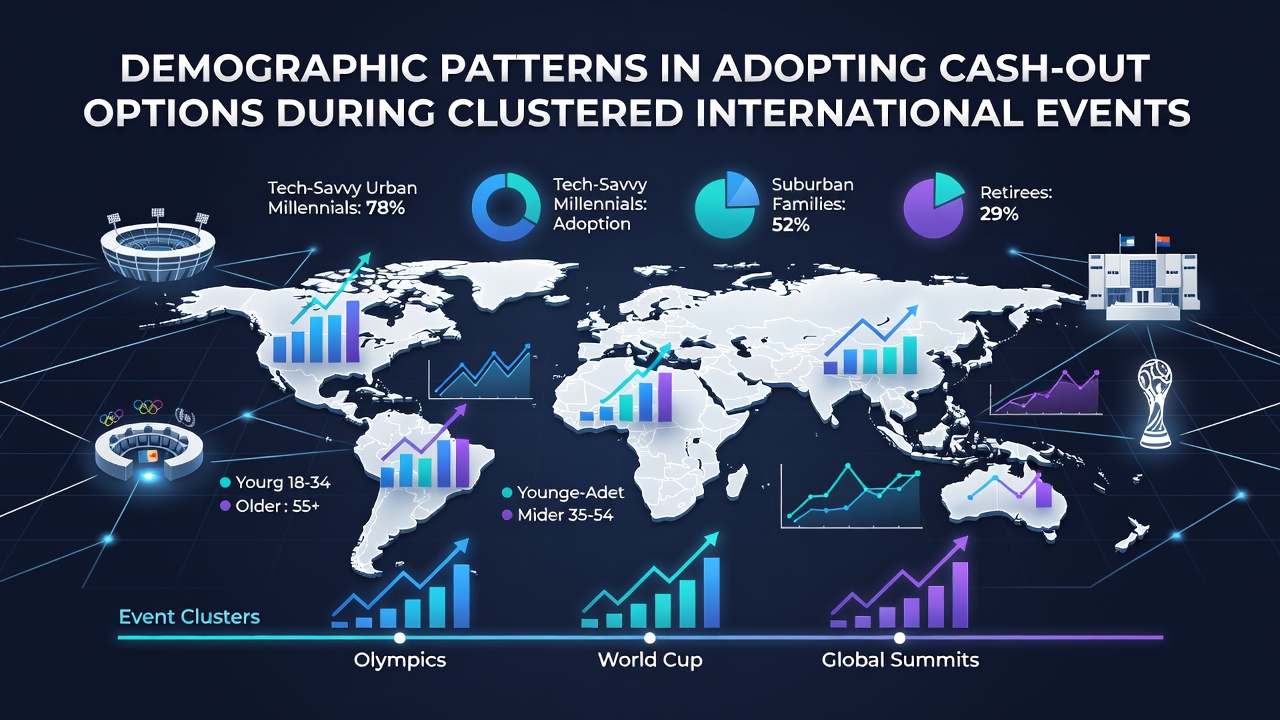
Clustered international events create overlapping windows of high-stakes activity across multiple sports and regions, and cash-out features on betting platforms reveal clear demographic divides in how participants manage their positions. Data from major operators shows that adoption rates shift noticeably when tournaments such as continental championships coincide with league finals or Olympic cycles, producing concentrated periods of decision-making under time pressure.
Age Groups and Timing Preferences
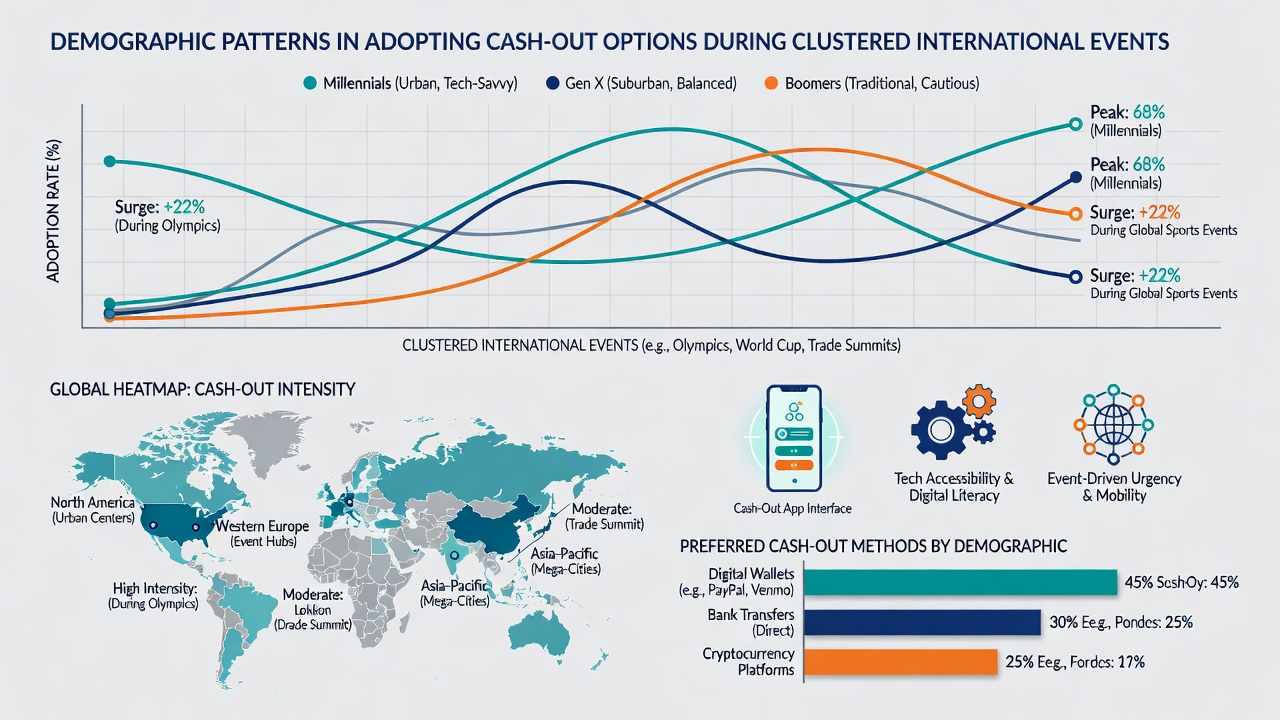
Younger participants between 18 and 34 account for the largest share of cash-out activity during these overlaps, with figures revealing they initiate the option roughly twice as often as those over 45. Studies from university research centers indicate this cohort tends to monitor live odds more frequently through mobile interfaces, allowing quicker reactions when multiple matches run simultaneously. Older groups, by contrast, show steadier hold patterns and lower overall cash-out frequency even when events cluster tightly in the calendar.
Platform logs from the 2024 European summer window demonstrated that users aged 25-29 executed cash-outs at peak hours aligned with evening fixtures across different time zones, whereas participants above 50 preferred to let bets ride through the full duration regardless of scoreline movement.
Regional and Urban-Rural Differences
Location plays a measurable role in how cash-out tools get used when events stack up. Urban bettors in North American and Australian markets demonstrate higher engagement rates than rural counterparts, with metropolitan users cashing out 35 percent more often according to aggregated operator reports. European data collected across several jurisdictions points to similar urban concentration, particularly in cities hosting multiple broadcast feeds during overlapping competitions.
Income and Platform Access
Higher-income brackets exhibit distinct patterns tied to account balances and risk thresholds. Participants earning above median levels tend to apply cash-out selectively during clustered events, often preserving portions of stakes when volatility spikes across concurrent fixtures. Lower-income groups display more binary outcomes, either holding until settlement or exiting early at higher percentages when live odds fluctuate rapidly. Access to advanced interface features correlates with these differences, since premium account tiers frequently bundle faster cash-out execution tools.
One operator dataset covering the 2025 overlap of South American and Asian league peaks found that users with verified higher deposit histories maintained longer average position durations before triggering cash-out, whereas first-time or lower-volume accounts exited within narrower time bands.
Gender Distribution in Usage
Gender splits appear in adoption frequency yet show convergence during high-intensity clusters. Male participants initiate cash-outs at higher baseline rates across most markets, yet female users increase their share notably when events overlap and promotional incentives activate simultaneously. Regulatory filings from the Nevada Gaming Control Board document this narrowing gap during the 2024 multi-league windows, with female cash-out percentages rising closer to male levels as fixture density increased.
Observers tracking behavior across platforms note that these shifts coincide with greater mobile engagement among female users during evening and weekend clusters, when several major competitions broadcast in parallel.
July 2026 Outlook and Expected Patterns
The 2026 FIFA World Cup schedule creates an extended cluster across North American host venues alongside concurrent domestic leagues and regional qualifiers. Early modeling from industry analysts projects continued age-based divergence, with 18-34 users likely driving the majority of cash-out volume during group-stage overlaps. Regional operators anticipate stronger urban uptake in host cities where live viewing combines with digital platform access, while gender convergence observed in prior cycles may repeat under sustained fixture density.
Reports from the Australian Gambling Research Centre highlight how similar event stacking in past cycles influenced capital distribution across user segments, providing a reference point for the upcoming North American window. Platforms prepare interface adjustments accordingly, focusing on faster execution paths for demographics that historically respond quickest during such periods.
Conclusion
Demographic patterns in cash-out adoption during clustered international events follow consistent lines tied to age, location, income verification, and gender dynamics. Platform data and regulatory summaries continue to map these variations as global calendars produce more frequent overlaps, allowing operators to align feature availability with observed user segments. The 2026 cycle will supply additional comparative figures once the full schedule unfolds across multiple jurisdictions.