Currency Swings and Roulette Stake Adjustments in Global Regulated Markets
Written by Willa Russell · Aug 8, 2026

Currency Swings and Roulette Stake Adjustments in Global Regulated Markets
Exchange rate movements create measurable shifts in effective stake values for roulette players who operate across currency boundaries in regulated jurisdictions, and operators adjust platform settings accordingly while participants recalibrate their wager sizes to preserve intended risk exposure. Data from multiple central banks shows that major pairs such as EUR/USD and AUD/CAD experienced average daily volatility ranges of 0.6 to 1.1 percent during the first half of 2026, with spikes reaching 2.4 percent in late July ahead of policy announcements.
Observed Volatility Patterns Across Key Pairs
European Central Bank records indicate that the euro weakened against the US dollar by 4.8 percent between January and August 2026, while the Australian dollar posted smaller but frequent swings against the Canadian dollar that averaged 0.9 percent per week during the same period. These movements translate directly into stake recalibrations because a player funding an account in one currency and placing bets on a platform denominated in another must account for conversion losses or gains at the moment of each transaction.
Regulators in several jurisdictions require operators to display stakes in both the platform currency and the player's local currency, yet the frequency of updates varies, and some systems refresh only once per hour. This lag becomes noticeable during high-volatility windows when a 1.5 percent intraday move can alter the real value of a 50-unit roulette bet by enough to push it outside the player's intended bankroll segment.
Stake Sizing Adjustments in Practice
Operators in licensed markets respond by offering dynamic stake displays and optional auto-conversion tools that lock in rates for fixed periods. Research from the Canadian Institute for Gaming Research found that players who activated real-time conversion alerts reduced unintended stake drift by 37 percent compared with those who relied on manual checks. The same study tracked over 12,000 roulette sessions across three platforms and noted that participants adjusted average bet sizes downward by 11 percent on average when volatility exceeded 1.8 percent for more than two consecutive trading days.
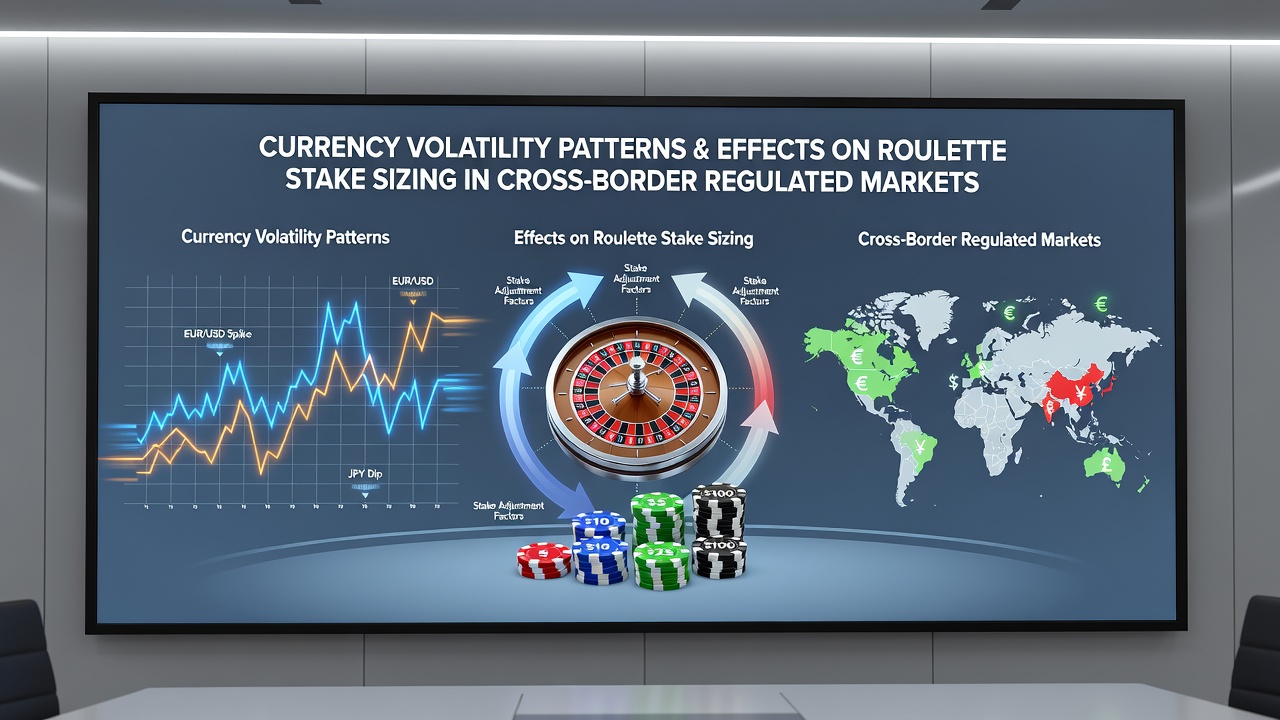
What's interesting is how these adjustments cluster around specific events. During the European Central Bank meeting cycle in August 2026, daily volatility on EUR pairs rose sharply, prompting operators to widen the refresh interval for displayed exchange rates from 30 minutes to 15 minutes on several sites serving cross-border traffic. Players who maintained fixed unit sizes in their home currency experienced effective stake increases of up to 3.2 percent on average, according to session logs analyzed by the institute.
Regulatory Frameworks and Reporting Requirements
Authorities in Australia and Canada require licensed platforms to maintain records of currency conversion impacts on player balances for at least 24 months, and these records must include timestamped exchange rates applied to each deposit and withdrawal. The Australian Communications and Media Authority publishes quarterly summaries that aggregate such data across operators, revealing that roulette represents the game type most frequently cited in player complaints related to currency timing differences. Figures for the second quarter of 2026 showed 1,248 such complaints, a 14 percent increase from the prior quarter that coincided wth heightened volatility in AUD pairs.
Industry groups such as the European Gaming and Betting Association have issued guidance encouraging operators to implement volatility buffers that automatically adjust minimum and maximum stake tables when daily exchange rate movement exceeds preset thresholds. Several major platforms adopted this approach in early 2026, resulting in temporary stake band reductions of 8 to 12 percent during volatile periods without altering the underlying game mathematics.
Player Behavior and Platform Tools
Those who study cross-border play patterns note that participants often set internal rules that tie stake sizing to a rolling five-day average exchange rate rather than the spot rate at the time of play. One documented approach used by experienced players involves converting planned session bankrolls at the start of each week and then treating those converted amounts as fixed units for the duration, which removes intraday fluctuation but introduces basis risk if the actual rate moves further before the next conversion.
Platform features that support this strategy include scheduled conversion locks and stake calculators that factor in projected volatility derived from recent historical data. Operators report higher retention rates among users who engage these tools regularly, though the exact figures vary by jurisdiction and player segment.
Conclusion
Currency volatility continues to influence how roulette stakes are sized and displayed in cross-border regulated environments, with operators and players both adapting through updated displays, conversion tools, and behavioral adjustments. Data from regulatory bodies and research institutions show clear links between exchange rate movements and observed changes in effective wager values, particularly during periods such as the August 2026 policy cycles. Continued monitoring of these patterns supports more precise alignment between intended and actual stake exposure across different currency jurisdictions.