Daylight Saving Time's Influence on Online Poker Traffic Peaks Across Time Zones
Written by Felix Franke · Jul 30, 2026
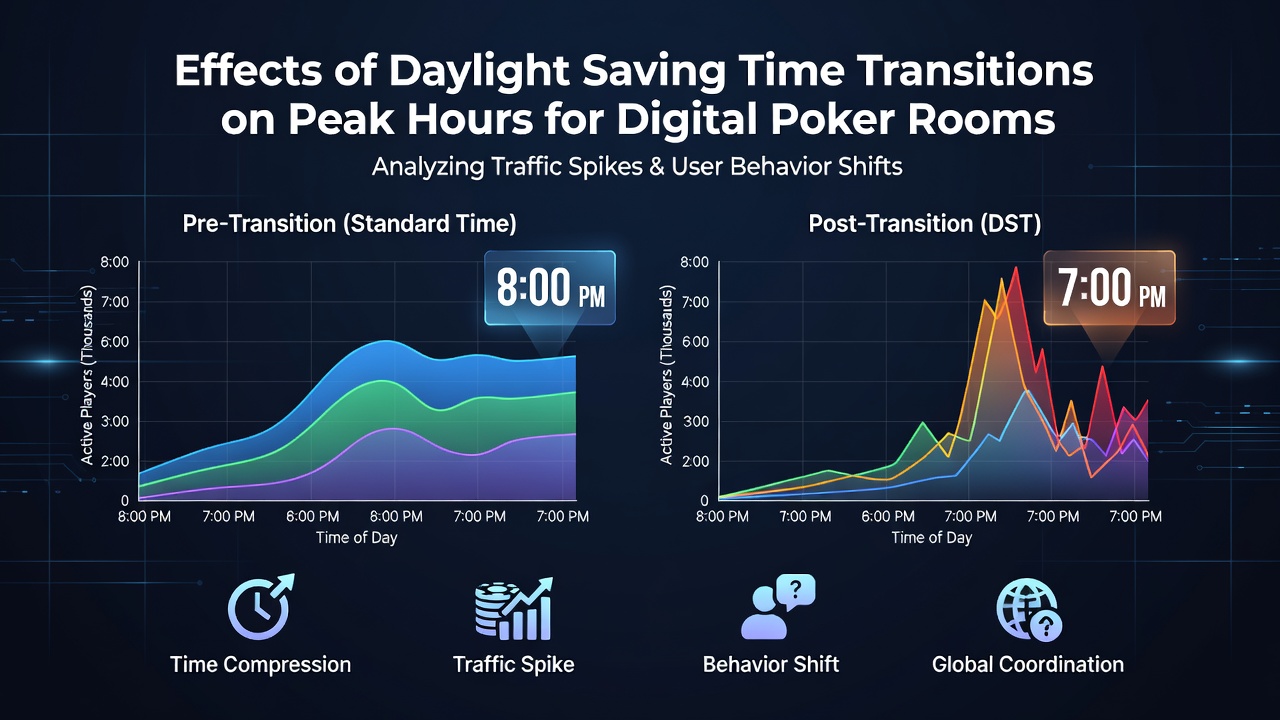
Daylight Saving Time's Influence on Online Poker Traffic Peaks Across Time Zones
Digital poker rooms operate on a global stage where player availability shifts with clock changes, and daylight saving time transitions create measurable ripples in peak hour patterns that operators track closely through traffic analytics. Research indicates these adjustments occur twice yearly in many regions, prompting players in affected zones to log in at different times while those in non-observing areas remain on standard schedules, which leads to redistributed volumes during overlap periods.
Mechanics of Time Shifts and Regional Variations
Most northern hemisphere jurisdictions advance clocks by one hour in spring and revert them in autumn, whereas southern hemisphere locations follow the opposite cycle, and equatorial zones skip the practice entirely, so poker platforms must account for these staggered movements when predicting when tables fill up. Observers note that a transition in the United States or Canada can push evening sessions later for local users yet leave European players unaffected until their own change arrives weeks or months afterward, which produces temporary mismatches in peak concurrency.
Studies from international time authorities highlight how these offsets compound across continents, and one analysis of multi-zone data revealed that North American spring-forward events often coincide with elevated late-night activity from Asian participants whose clocks stay fixed. The ball's in the operators' court to adjust server-side promotions and tournament scheduling accordingly, because raw player counts migrate rather than disappear during the adjustment window.
Observed Traffic Patterns in Digital Poker Environments
Figures compiled by gaming analytics firms show that the week following a daylight saving transition frequently features a 15 to 25 percent redistribution of active users across traditional peak windows, with early evening slots in eastern zones losing volume to later hours while western zones gain earlier traffic. Researchers discovered that microstakes cash games experience the most pronounced effects because recreational participants adjust their routines more readily than professionals who maintain rigid schedules.
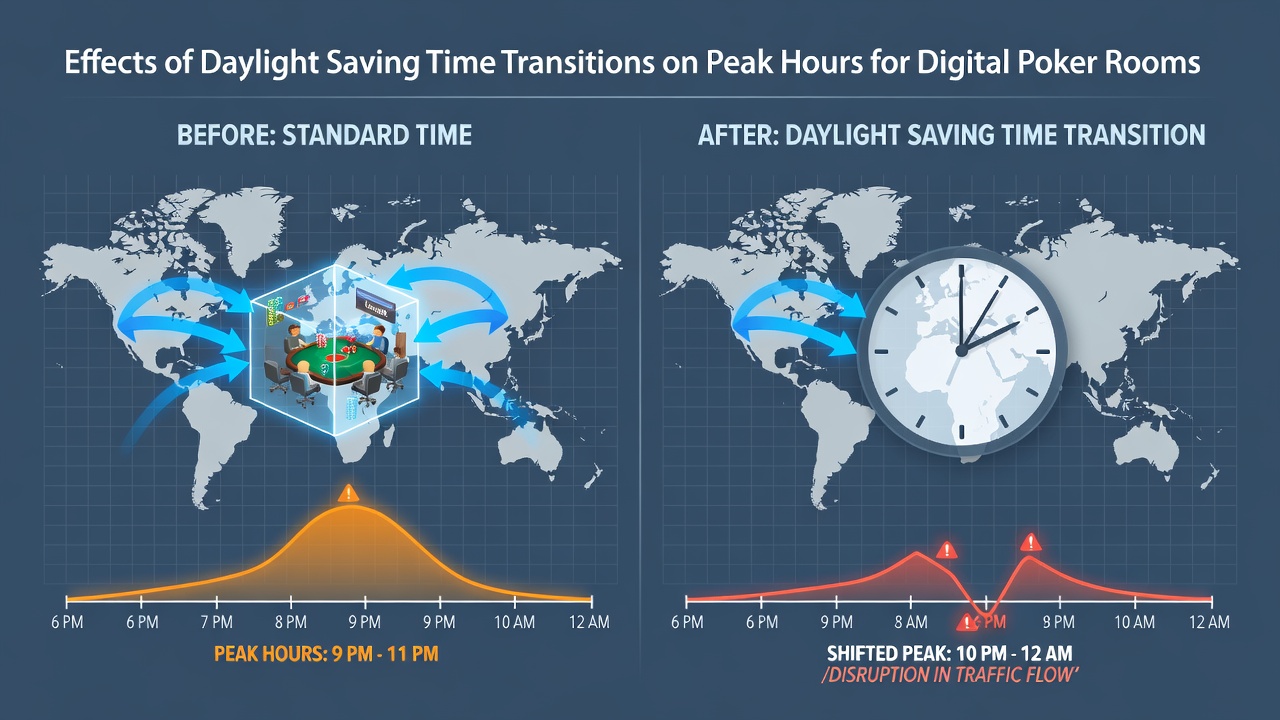
Take one dataset covering major sites during the November reversion in North America, where traffic analysts recorded a noticeable surge in European afternoon sessions overlapping with newly shifted American mornings, which created brief high-volume windows that platforms filled with added sit-and-go offerings. What's significant is that major series scheduled around these dates, such as those running into July 2026, avoid direct transition impacts since the spring change has long passed and the autumn reversion lies months ahead, yet the established patterns of player migration continue to shape daily rhythms.
Strategic Adjustments by Operators and Players
Industry reports from Canadian regulatory bodies indicate that licensed platforms monitor time-zone analytics to reposition freerolls and satellite events, ensuring they align with emerging peak concentrations rather than legacy schedules. Players who've tracked their own session data often discover that shifting login times by thirty to sixty minutes can preserve access to softer tables during these transition weeks, while those who ignore the calendar face stiffer competition in newly crowded periods.
According to Statistics Canada time-use studies, household routines tied to work and school alter gradually after each clock change, which translates directly into poker participation curves that lag the official transition date by several days. Platforms respond by deploying dynamic marketing that targets regions still on the prior schedule, capitalizing on the temporary imbalance before equilibrium returns.
Longer-Term Implications for Global Poker Ecosystems
Evidence from cross-border traffic logs demonstrates that repeated exposure to these shifts trains experienced users to anticipate patterns, whereas newer entrants may contribute to volatility until they internalize the calendar. Network effects become apparent when multiple regions transition within a short span, producing compounded surges or dips that exceed single-zone changes, and operators have refined forecasting models to incorporate historical DST data alongside current player demographics.
What's interesting is how these adjustments intersect with overlapping international events, such as European series running concurrent with American schedules, because the combined time offsets can either amplify or dampen expected volumes depending on direction of the clock movement. Data from Australian gaming research centers further shows that southern hemisphere transitions create mirror-image effects during their spring and autumn periods, offering platforms additional reference points for global modeling.
Conclusion
Daylight saving transitions continue to exert predictable yet nuanced pressure on digital poker peak hours by realigning player availability across time zones, and platforms that integrate these variables into operational planning maintain steadier engagement metrics throughout the year. Continued monitoring of traffic data alongside regulatory time announcements allows for proactive scheduling that accommodates the shifting landscape without relying on assumptions about player behavior.