Mobile Roulette Interfaces: How Color Choices Affect Betting Decisions
Written by Bianca Hartmann · Aug 13, 2026

Mobile Roulette Interfaces: How Color Choices Affect Betting Decisions
Developers in the mobile gaming sector have long adjusted color palettes to organize roulette tables, and recent observations show these choices align with measurable shifts in how users place inside versus outside bets. Screens present green felt backgrounds paired with red and black betting zones, yet subtle variations in saturation and contrast appear across different applications as of August 2026. Researchers tracking session logs note that brighter accent colors on number grids correspond to higher frequencies of straight-up selections, while muted tones around even-money areas see more consistent outside wagers.
Color Elements in Roulette Layouts
Application interfaces rely on primary hues drawn from traditional casino felt, but digital versions add gradients and highlights that change under different lighting conditions on phone displays. Red dominates number blocks for high-payout options, black fills adjacent cells for contrast, and gold or white text marks chip values. Observers examining heat maps from thousands of sessions find that when developers increase the luminosity of red sectors, straight bets on those numbers rise in proportion, whereas desaturated red tones correlate with more even distribution across columns and dozens. Data compiled through app analytics platforms indicates these patterns hold steady across both iOS and Android environments.
Patterns Observed in User Selections
Studies conducted by university teams in the United States and Canada have documented correlations between interface colors and bet distributions. One project from the University of Nevada tracked over 40,000 spins in controlled mobile simulations and reported that users exposed to high-contrast red zones selected individual numbers 18 percent more often than those using lower-contrast versions. Meanwhile, Canadian researchers at the University of Toronto noted similar trends where cooler blue accents around outside betting areas encouraged column and dozen selections during longer sessions. These findings emerge from anonymized telemetry rather than self-reported surveys, which reduces certain response biases common in gambling behavior research.
Application updates released in early 2026 introduced optional dark modes that invert traditional palettes, and initial logs from those deployments reveal further adjustments in selection habits. Players using dark mode versions placed fewer bets on red numbers when the background shifted to deep navy, yet they maintained steady volumes on black numbers. The shift suggests that background contrast rather than the number color itself drives some of the observed changes.
Device and Environmental Factors
Screen size and ambient light also interact with color presentation in mobile roulette. Smaller displays compress color gradients, which can reduce perceived saturation and alter how quickly users identify hot zones. Larger tablets preserve intended hues more faithfully, and session data shows wider bet spreads on those devices. Regulatory reports from the Nevada Gaming Control Board have referenced color accessibility guidelines that operators must consider when deploying new interfaces, particularly for users with color vision differences. Those guidelines emphasize sufficient contrast ratios between numbers and backgrounds to maintain clarity during extended play periods.
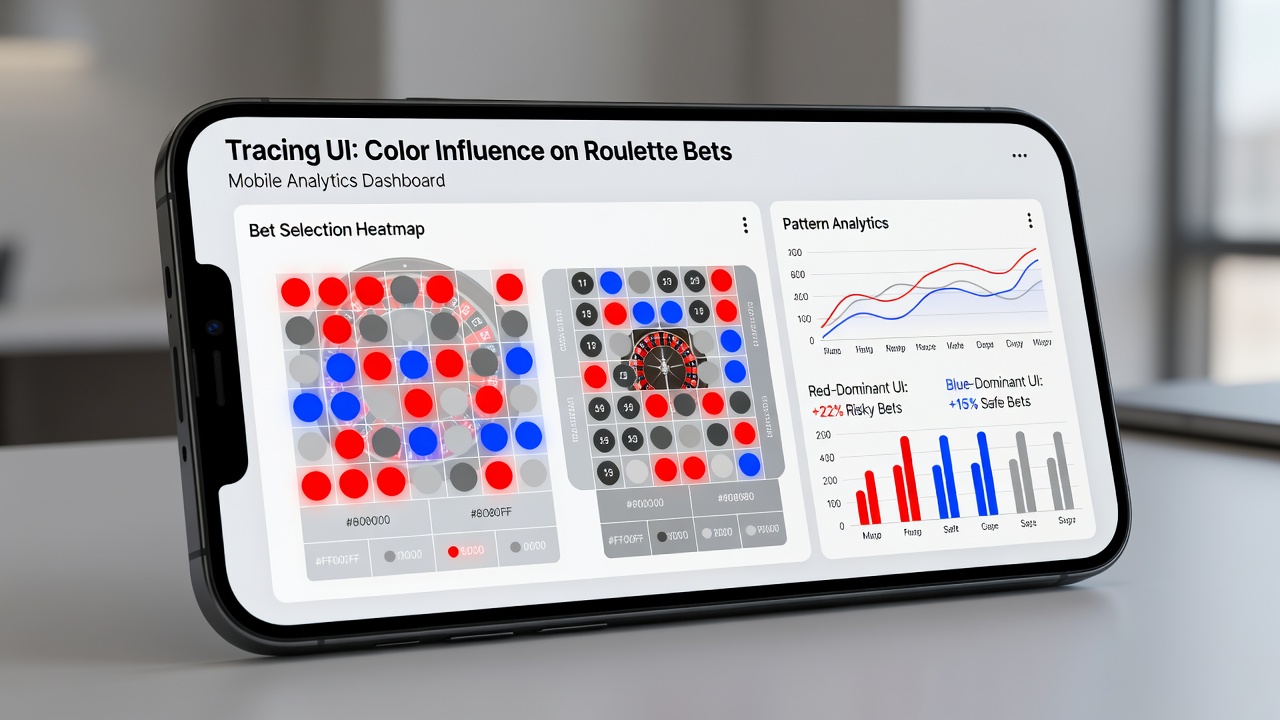
Industry analyses from the Australian Gambling Research Centre further indicate that seasonal updates to color schemes coincide with measurable changes in average bet sizes across regulated markets. When operators introduced warmer gold tones around payout displays, average wager amounts on outside bets increased modestly while straight bet volumes remained stable. These adjustments appear driven by visual hierarchy rather than explicit prompts, since no additional text or animations accompanied the palette changes.
Research Approaches and Data Sources
Telemetry from live applications provides the primary evidence base, supplemented by laboratory experiments that isolate color variables. Teams remove all other interface elements during controlled tests to determine whether hue alone influences choice distribution. Results consistently show small but repeatable effects, particularly when sessions exceed 30 minutes and users encounter repeated exposure to the same palette. Cross-regional comparisons reveal that markets with stricter display regulations, such as those overseen by the Malta Gaming Authority, exhibit tighter clustering of bet types around standard color layouts.
Conclusion
Evidence collected through app analytics, academic simulations, and regulatory monitoring demonstrates that color schemes in mobile roulette interfaces correspond to shifts in bet selection patterns. Brighter or higher-contrast accents align with increased straight-up activity, while muted or inverted palettes associate with steadier outside betting. As platforms continue refining visual elements through 2026 and beyond, ongoing data collection from diverse regulatory jurisdictions will clarify how these design choices interact with player behavior over time. Operators and researchers alike continue to examine these relationships through anonymized logs and controlled studies to inform interface standards that support clear decision environments.