Payment Speed Dynamics Shaping Stake Choices in Live Mobile Sports Events
Written by Rosa Ludwig · Jul 20, 2026
Payment Speed Dynamics Shaping Stake Choices in Live Mobile Sports Events
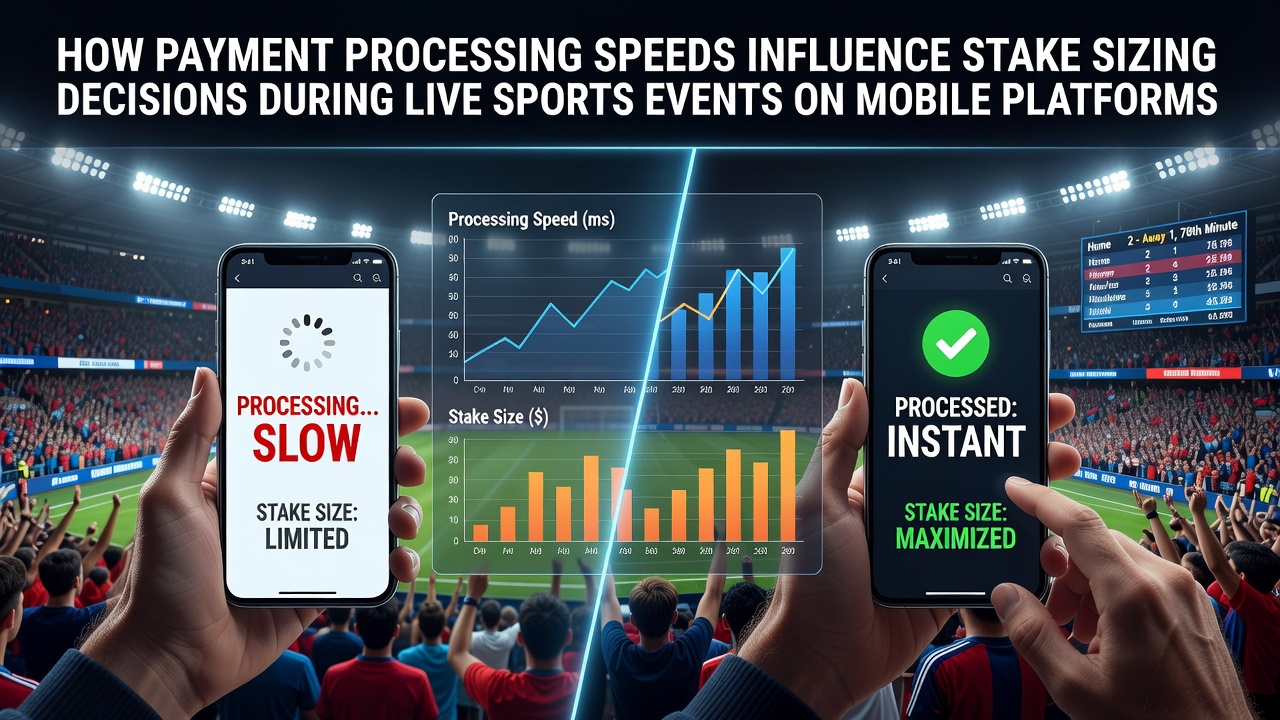
Live sports wagering on mobile devices has grown rapidly since the expansion of regulated markets in multiple jurisdictions, and payment processing speeds now play a central role in how participants adjust their stake sizes during ongoing events. Faster transaction confirmations allow users to move funds into betting accounts within seconds, which in turn supports decisions to increase or decrease wager amounts based on unfolding game developments. Slower processing times, by contrast, often force bettors to operate within pre-loaded balances that may not reflect current risk assessments.
Data from the 2025-2026 season across major European and North American leagues shows that platforms with sub-three-second deposit approvals recorded higher average stake changes per minute during high-action periods such as the final quarter of basketball games or extra time in soccer matches. Researchers at the University of Nevada's International Gaming Institute documented these patterns through anonymized transaction logs, noting that the ability to top up accounts instantly correlates with more granular stake recalibrations rather than static pre-match amounts.
Transaction Latency and Real-Time Decision Windows
During live events the window for placing or modifying bets typically lasts only a few seconds after key occurrences like a goal or a timeout. Payment rails that complete authorization in under two seconds enable users to respond to these moments with adjusted stake sizes, whereas delays exceeding five seconds frequently result in missed opportunities or reliance on conservative preset limits. Observers note that mobile operators integrating instant bank transfers and digital wallet top-ups see measurable differences in user behavior compared with platforms that still route through traditional card processors with longer settlement queues.
Figures released by the Australian Gambling Research Centre in early 2026 indicate that jurisdictions permitting real-time payment schemes experienced a 17 percent rise in mid-event stake modifications during the Australian Football League season. The same report highlights that participants using platforms with delayed confirmations tended to maintain smaller, fixed stake increments to avoid exhausting available balances while waiting for additional funds to arrive.
Stake Sizing Patterns Across Payment Methods
Users who rely on instant digital wallets often distribute their bankrolls across multiple smaller stakes that can be scaled upward quickly when momentum shifts in their favor. In contrast, those dependent on slower card or bank transfers frequently commit larger portions of their initial deposit early in an event because subsequent adjustments carry higher timing risk. One study of Canadian provincial gaming data from July 2025 through March 2026 found that e-wallet users adjusted stakes an average of 4.2 times per game, while card-only users averaged 1.8 adjustments under similar conditions.
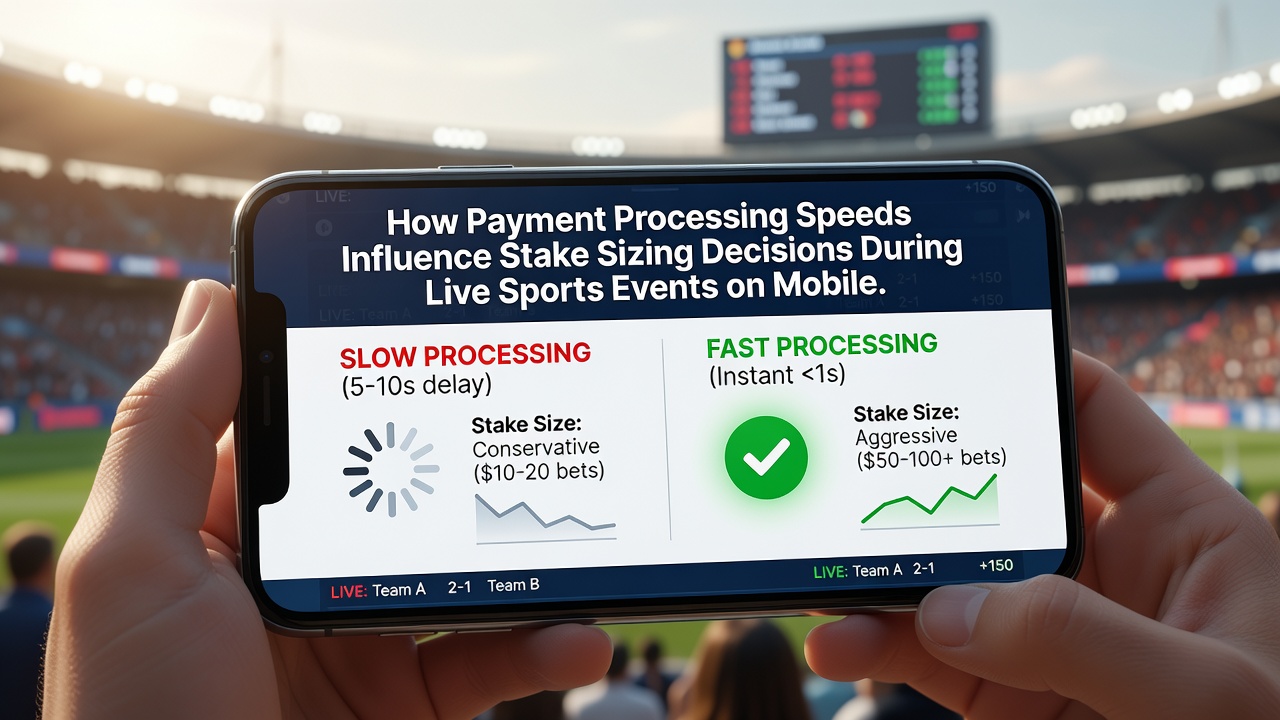
These differences appear most pronounced in sports with continuous scoring such as basketball and hockey, where point spreads and totals move frequently. Platforms that surface real-time balance updates immediately after each transaction further encourage incremental stake sizing because users receive immediate visual feedback on remaining funds. Regulatory filings from the New Jersey Division of Gaming Enforcement show that operators offering same-second wallet settlements reported higher volumes of in-play wagers under $25, suggesting a preference for precision over large single commitments when speed supports rapid iteration.
Regulatory and Infrastructure Influences
Payment speed standards vary by region because licensing authorities impose different requirements on transaction monitoring and anti-money-laundering checks. Markets that streamlined verification processes for low-risk mobile deposits in 2025 and 2026 enabled operators to reduce average processing times without compromising compliance. The Malta Gaming Authority, for instance, updated its technical specifications in late 2025 to allow pre-approved wallet providers to bypass secondary authentication for repeat users, resulting in documented reductions in deposit latency across several major sportsbooks.
Industry associations such as the European Gaming and Betting Association have published white papers examining how infrastructure upgrades affect player behavior in live markets. Their 2026 analysis of aggregated operator data points to a clear relationship between confirmation speed and the granularity of stake sizing, particularly among users who engage with in-play features on smartphones rather than desktop interfaces. These findings align with transaction records from Asian markets where mobile-first payment systems have dominated for several years.
Conclusion
Payment processing speeds directly influence the frequency and magnitude of stake adjustments that mobile users make during live sports events. Faster rails support more responsive decision-making by keeping balances current and reducing the friction between intent and execution, while slower systems encourage conservative pre-commitment strategies. As mobile platforms continue to integrate newer payment technologies, the observable patterns in stake sizing behavior are expected to evolve in line with the underlying transaction capabilities available to participants across different regulatory environments.