Shifting Player Flows: Tracking How Updates Reshape Movement Between Game Variants in Shared Platforms
Written by Rosa Ludwig · Aug 24, 2026
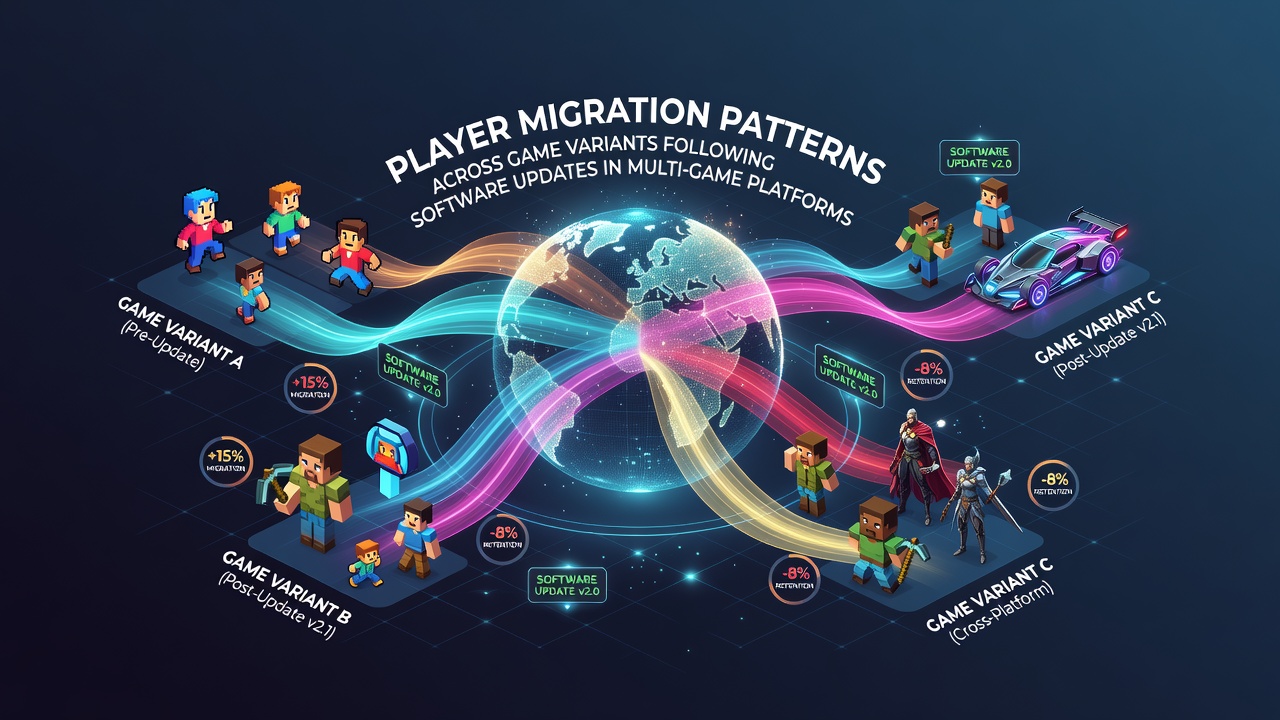
Player Shifts Between Game Types After Platform Updates in Unified Gaming Environments
Software updates on multi-game platforms often prompt measurable changes in how participants distribute their activity across variants such as slots, table games, and poker formats, and data from integrated systems shows these movements follow predictable sequences tied to specific patch characteristics. Platforms that host multiple game categories simultaneously record traffic reallocations within hours of deployment when interface modifications or balance adjustments appear in one area but not others.
Initial Response Patterns After Deployment
Research indicates that participants tend to migrate toward variants that retain familiar mechanics while avoiding those with altered payout structures or new user interface elements introduced during the same update cycle. Figures from platform analytics reveal spikes in table game sessions immediately following slot-specific patches, whereas poker traffic may decline until separate adjustments address community features. One study revealed that these early shifts stabilize within 72 hours when no further changes occur, yet extended monitoring through August 2026 demonstrated longer adjustment periods when multiple variants received simultaneous revisions.
Variant-Specific Migration Trends
Slots frequently lose session volume to blackjack or roulette when reel configurations or bonus trigger frequencies receive modifications, and observers note that players who previously favored high-volatility options often sample lower-volatility table variants during the transition. Poker rings show different dynamics because updates to hand history tools or lobby sorting functions can redirect traffic toward cash games or tournaments depending on which format receives the interface refinement first. Data shows that multi-game environments experience cross-variant movement rates between 18 and 34 percent within the first week after major updates, with the highest percentages occurring when the patch addresses security or payment processing rather than gameplay mechanics themselves.
Factors Influencing Direction of Movement
Update scope determines primary migration routes, and patches that improve loading speeds across the entire platform encourage broader exploration while targeted fixes in one category create narrower flows toward unaffected areas. Participants who track volatility metrics tend to relocate toward variants whose reported return percentages remain unchanged, whereas those focused on social features migrate based on chat or leaderboard alterations. Evidence suggests that regulatory reporting requirements in certain jurisdictions capture these redistributions as part of operational compliance, and records from the Nevada Gaming Control Board document similar patterns when updates coincide with new game approvals.
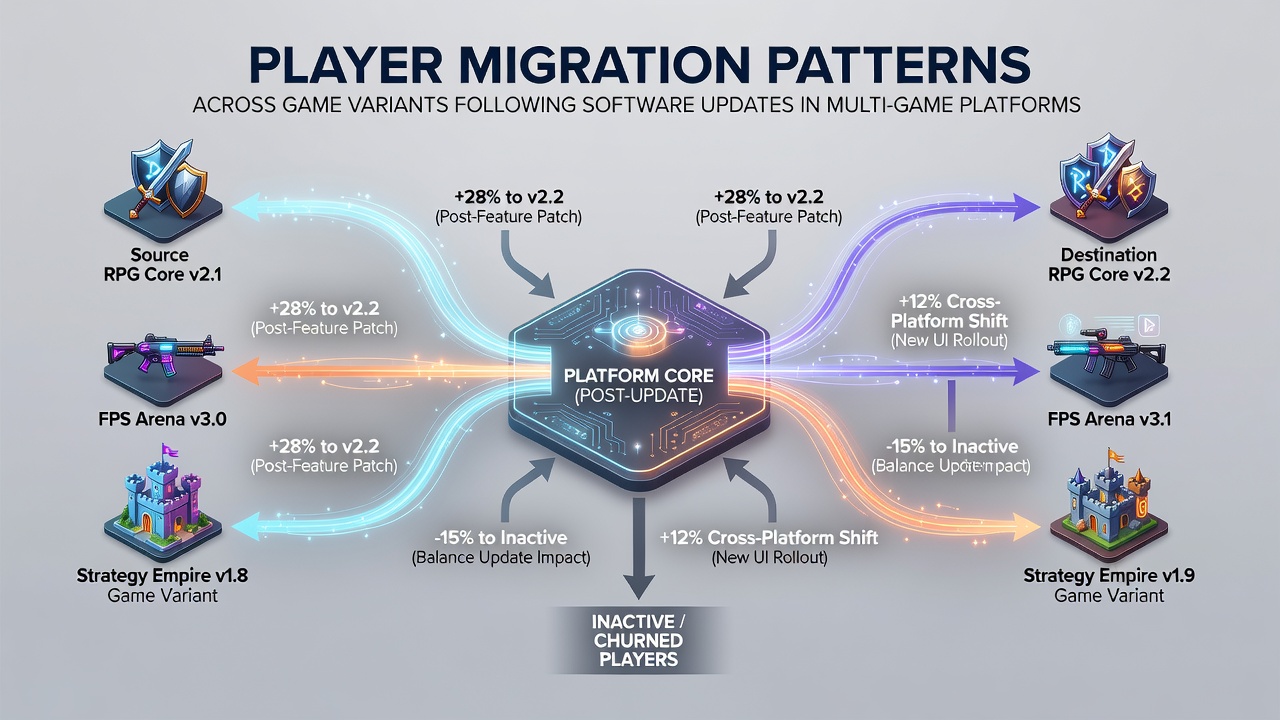
Longer-Term Stabilization and Recurrence
After initial redistribution, activity levels across variants return toward baseline distributions within two to four weeks unless subsequent patches intervene, and repeated update cycles produce cumulative effects that gradually reshape overall platform composition. Those who study these patterns find that loyalty program structures can either accelerate or dampen migration depending on whether point earning rates adjust in tandem with the software changes. Academic work from the University of Nevada, Reno gaming research group has tracked how participants develop preferences for specific variant combinations that persist across multiple update events, creating stable clusters within the broader user base.
Measurement Approaches and Data Sources
Platform operators rely on session duration logs, deposit allocation records, and variant entry timestamps to quantify movement, and external analyses draw from aggregated reports issued by regional gaming authorities including the Australian Gambling Research Centre. These datasets allow comparison across different update types, revealing that security-focused patches produce more diffuse migration than content or mechanics revisions. Observers note that real-time dashboards now incorporate migration heat maps that highlight which variants absorb displaced activity most rapidly after each deployment.
Conclusion
Patterns of player movement across game variants after software updates reflect interactions between update content, existing player habits, and platform architecture, and continued monitoring through successive cycles provides clearer insight into how these redistributions evolve over time. Comprehensive tracking remains essential for understanding traffic allocation in environments that combine multiple game categories under single accounts.