Streaming Surges Reshape Live Football Betting Dynamics in Real Time
Written by Willa Russell · Aug 20, 2026
Streaming Surges Reshape Live Football Betting Dynamics in Real Time
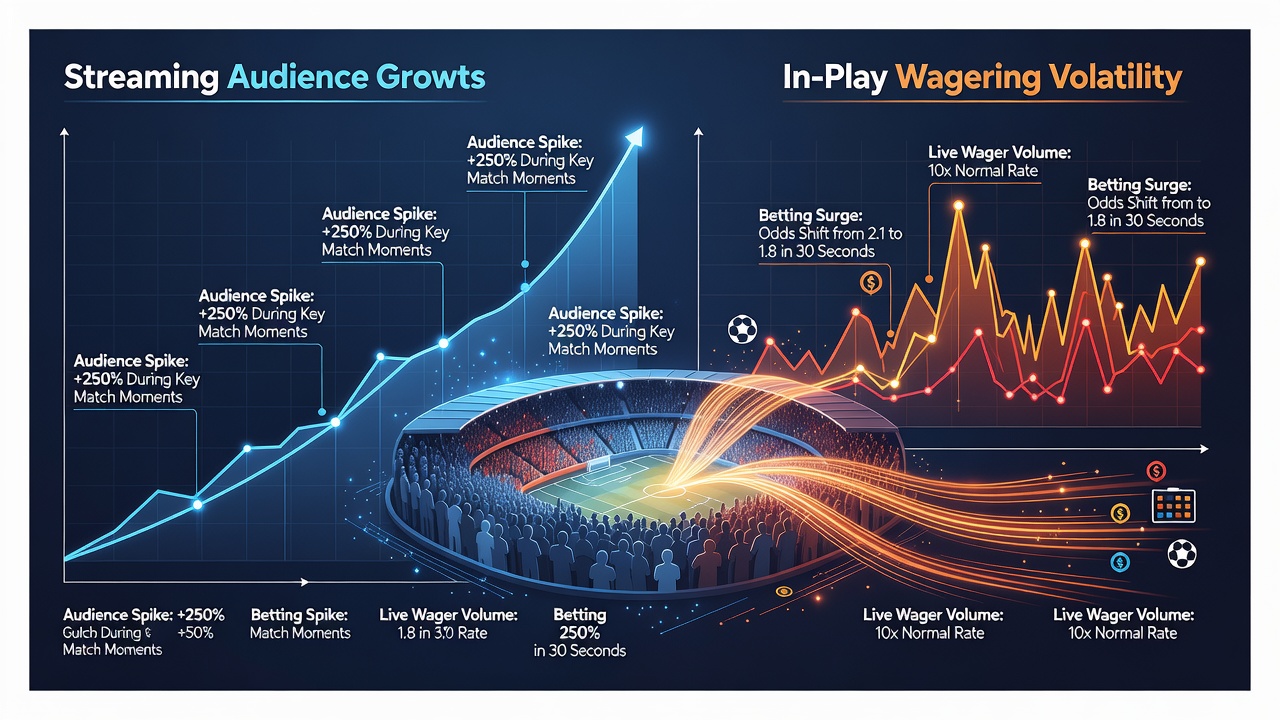
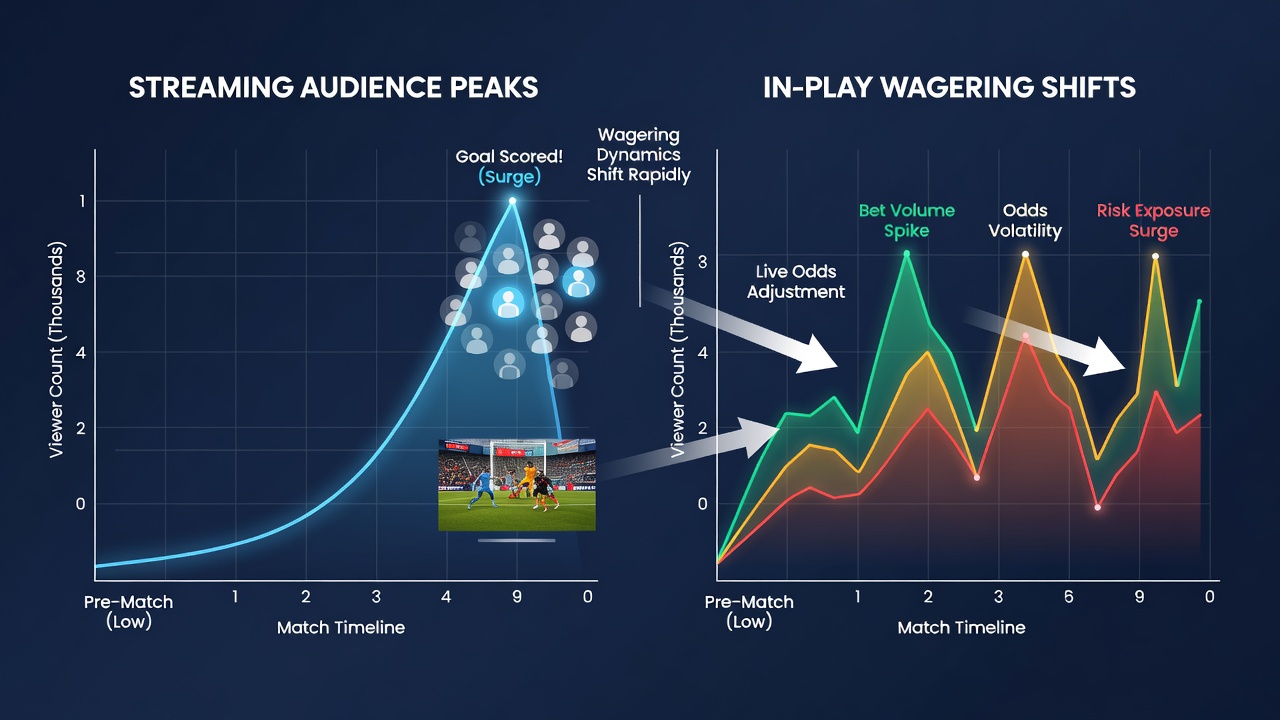
Streaming platforms report consistent audience spikes during major football matches, and these peaks coincide with measurable increases in in-play wagering activity across regulated betting sites. Data from multiple operators indicate that live viewer numbers often rise sharply in the first 15 minutes after kickoff, while bet volumes follow a similar pattern with heightened activity on next-goal markets and player performance props. Researchers tracking these correlations note that platforms adjust odds more frequently during high-traffic windows because incoming wagers arrive in larger batches and at faster rates than during off-peak periods.
Viewer Growth Patterns During Key Fixtures
Analysts at industry monitoring firms have documented that championship matches and international qualifiers generate the largest concurrent streams, with European leagues contributing the bulk of traffic during evening slots in their domestic time zones. August 2026 schedules show several overlapping domestic league openers across top divisions, creating extended windows where multiple high-profile games stream simultaneously and draw overlapping audiences. Observers point out that these clustered events produce sustained rather than isolated peaks, allowing betting systems to maintain elevated liquidity for several hours without the sharp drop-offs typical after single fixtures end.
Traffic logs reveal secondary surges during half-time and injury-time segments, periods when viewers often check multiple data feeds or switch between matches. Betting exchanges register corresponding lifts in matched bets on set-piece outcomes and stoppage-time results because participants react quickly to on-screen replays and commentator updates. Such synchronization between stream events and wager placement has prompted operators to deploy additional risk-management capacity during these intervals to keep markets stable.
Platform Adjustments and Liquidity Shifts
Operators respond to audience-driven volume increases by widening bet acceptance limits on popular in-play options while tightening exposure on less liquid side markets. Figures from platform telemetry show that average stake sizes per user rise modestly during peak streaming hours, yet the total number of distinct bettors grows more substantially, spreading risk across a larger participant pool. This distribution pattern helps exchanges maintain tighter spreads on main markets even as overall turnover climbs.
Payment processors handling regulated markets record faster deposit flows during these same windows, particularly from users who have already opened streaming sessions on connected devices. Settlement times remain consistent because automated systems flag and clear the majority of transactions without manual review. Regulatory filings from bodies such as the European Gaming Regulators Association indicate that complaint volumes tied to delayed payouts do not increase proportionally with the higher transaction counts recorded during peak periods.
Regional Variations in Response Timing
Markets in different time zones display distinct lag patterns between stream peaks and betting surges. Asian operators often see earlier upticks tied to morning kickoffs in Europe, whereas North American platforms experience delayed but concentrated activity once evening fixtures align with local prime-time viewing. Academic studies from sports analytics departments at institutions including the University of Sydney have mapped these offsets, showing that cross-border bettors who follow multiple leagues contribute to staggered liquidity injections that smooth overall market depth.
Device data further illustrate that mobile streaming dominates during commute hours in urban centers, correlating with quicker bet placements on simplified interfaces. Desktop sessions, more common during evening domestic viewing, associate with deeper market exploration and multi-leg in-play combinations. These behavioral distinctions help operators calibrate interface prompts and promotional visibility according to expected traffic sources.
Data Integration and Future Monitoring
Joint ventures between streaming services and betting technology providers now feed anonymized viewership metrics into odds models, allowing real-time calibration of implied probabilities. Reports from the International Esports Federation note parallel developments in adjacent live-event verticals, suggesting that football platforms may adopt similar viewer-to-odds pipelines as infrastructure matures. Continuous monitoring of these linkages remains essential for maintaining market integrity as audience volumes continue to scale with improved global connectivity.
Conclusion
Streaming audience peaks and in-play football wagering volumes move in close alignment, prompting operators to refine liquidity management, risk controls, and interface design around predictable traffic cycles. Regional timing differences and device-specific behaviors add layers of complexity that data-driven systems address through adaptive modeling. Ongoing integration of viewership signals into betting infrastructure supports stable operations even as concurrent audiences reach new highs during clustered match schedules.