Tropical Storms Reshaping Live Dealer Table Access in Key Gaming Destinations
Written by Freya Bauer · Jun 13, 2026
Tropical Storms Reshaping Live Dealer Table Access in Key Gaming Destinations
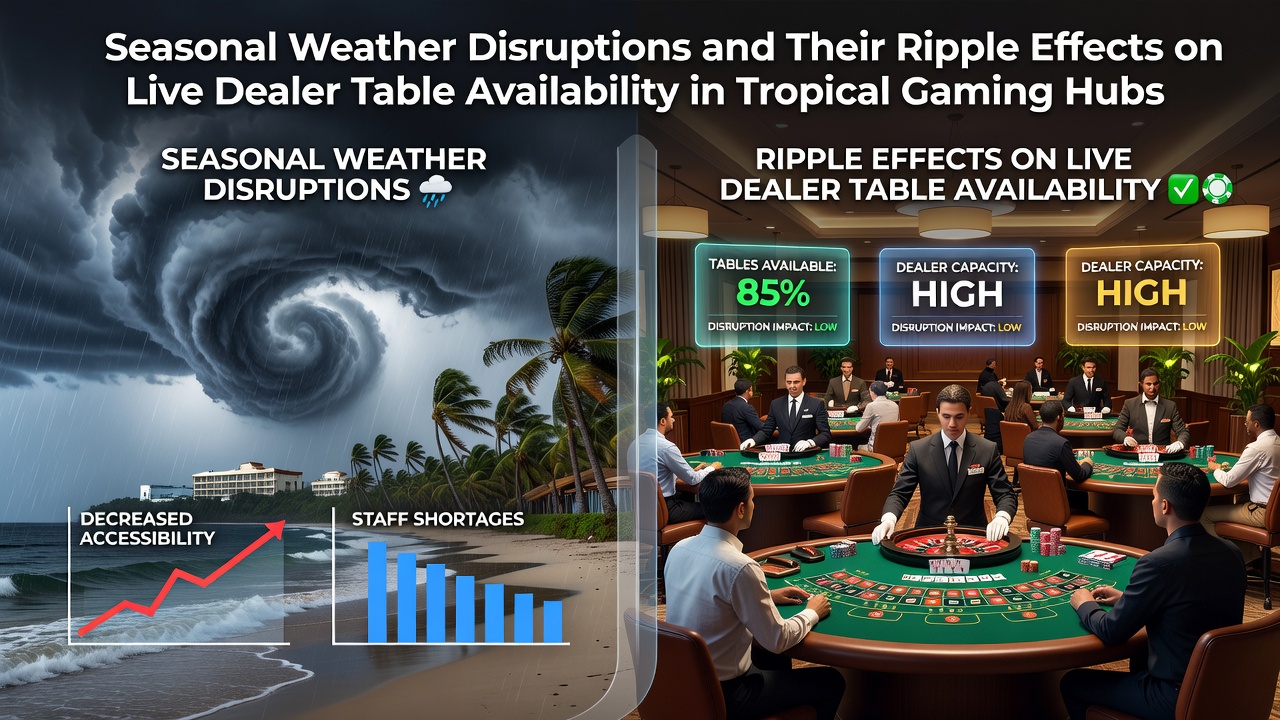
Seasonal weather patterns create recurring challenges for live dealer operations across tropical gaming centers where operators maintain real-time table games for international audiences, and these disruptions often begin intensifying around June when monsoon and early hurricane activity peaks in multiple regions simultaneously.
Facilities in the Philippines, Vietnam, and parts of the Caribbean rely on stable infrastructure to deliver continuous blackjack, roulette, and baccarat streams, yet typhoons and tropical storms frequently interrupt power grids and internet connectivity that studios depend on for uninterrupted broadcasts.
Regional Weather Cycles and Operational Vulnerabilities
Observers note that the western Pacific typhoon season overlaps with Caribbean hurricane activity each year, creating staggered but persistent impacts on staffing and equipment reliability at live dealer hubs; data from regional meteorological agencies shows peak storm formation typically accelerates after the first week of June, aligning with increased player traffic during major sporting events worldwide.
Casinos in Manila and Cebu have documented repeated instances where heavy rainfall and wind gusts force temporary studio shutdowns, while similar conditions in Macau and surrounding areas lead to reduced dealer shifts because transportation networks become unreliable during alerts.
Direct Effects on Table Availability and Staffing
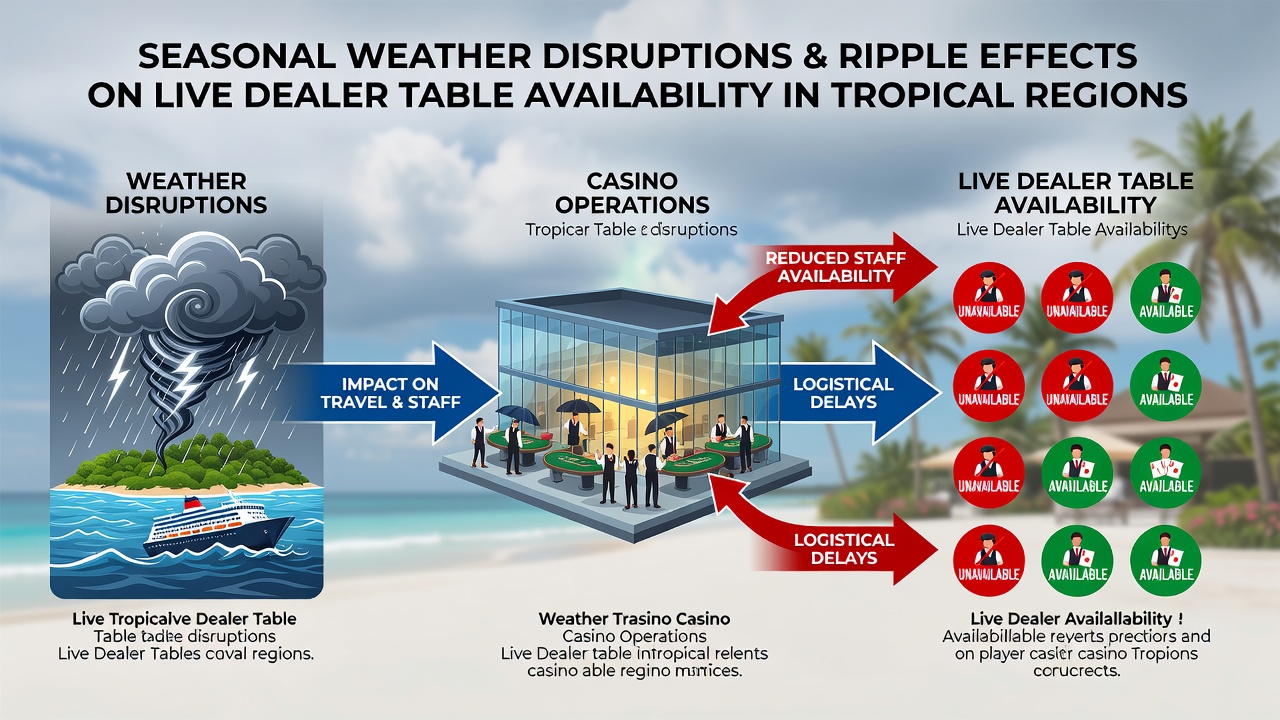
Live dealer tables require on-site personnel who must commute to secure facilities, and weather warnings often trigger local government advisories that restrict movement, resulting in fewer open tables during affected periods; research from tourism and hospitality studies indicates that employee absenteeism rises sharply when storm tracks pass within 200 kilometers of gaming districts.
Operators respond by consolidating games into fewer active studios or shifting select tables to backup locations, yet this adjustment frequently reduces overall variety and increases wait times for popular variants like speed baccarat or multi-hand blackjack.
Broader Ripple Effects Across Player Markets
Players notice immediate consequences through delayed game starts and occasional stream interruptions that prompt platforms to redirect traffic toward RNG alternatives, and industry reports highlight measurable drops in live table participation during active storm periods; figures from regulatory bodies in Southeast Asia reveal that session volumes can decline by double-digit percentages when multiple hubs experience concurrent disruptions.
What's interesting is how these availability shifts influence betting patterns, with some participants migrating to platforms based in less weather-prone jurisdictions while others adjust session timing to avoid peak disruption windows.
Adaptation Measures Implemented by Operators
Facilities have invested in redundant power systems and satellite connectivity to maintain minimal service levels during outages, and several major groups now maintain secondary studios in inland or elevated locations that remain operational when coastal sites face evacuation orders; partnerships with local emergency services also enable faster post-storm recovery so tables can reopen within hours rather than days.
According to analyses from climate resilience research groups, these preparations have reduced average downtime by roughly 30 percent compared with conditions observed five years earlier, although complete elimination of interruptions remains impossible given the scale of seasonal events.
Looking Ahead to June 2026 and Beyond
Projections from meteorological organizations suggest the 2026 season may follow established patterns, with early activity possible in both the Atlantic and Pacific basins; gaming operators continue refining contingency protocols that include cross-training dealers and pre-positioning equipment to minimize gaps in live dealer offerings.
Those who monitor these intersections between climate and commerce note that continued infrastructure upgrades alongside improved forecasting accuracy should help stabilize availability even as seasonal pressures persist.
Conclusion
Seasonal weather events exert measurable influence on live dealer table availability through direct infrastructure challenges and indirect staffing constraints, and operators across tropical hubs have developed layered responses that limit but do not erase these effects; ongoing monitoring by regulatory agencies and research institutions will continue to track how these dynamics evolve in coming seasons.