Weather Events Reshaping Live Dealer Operations Across International Borders
Written by Freya Bauer · Aug 24, 2026
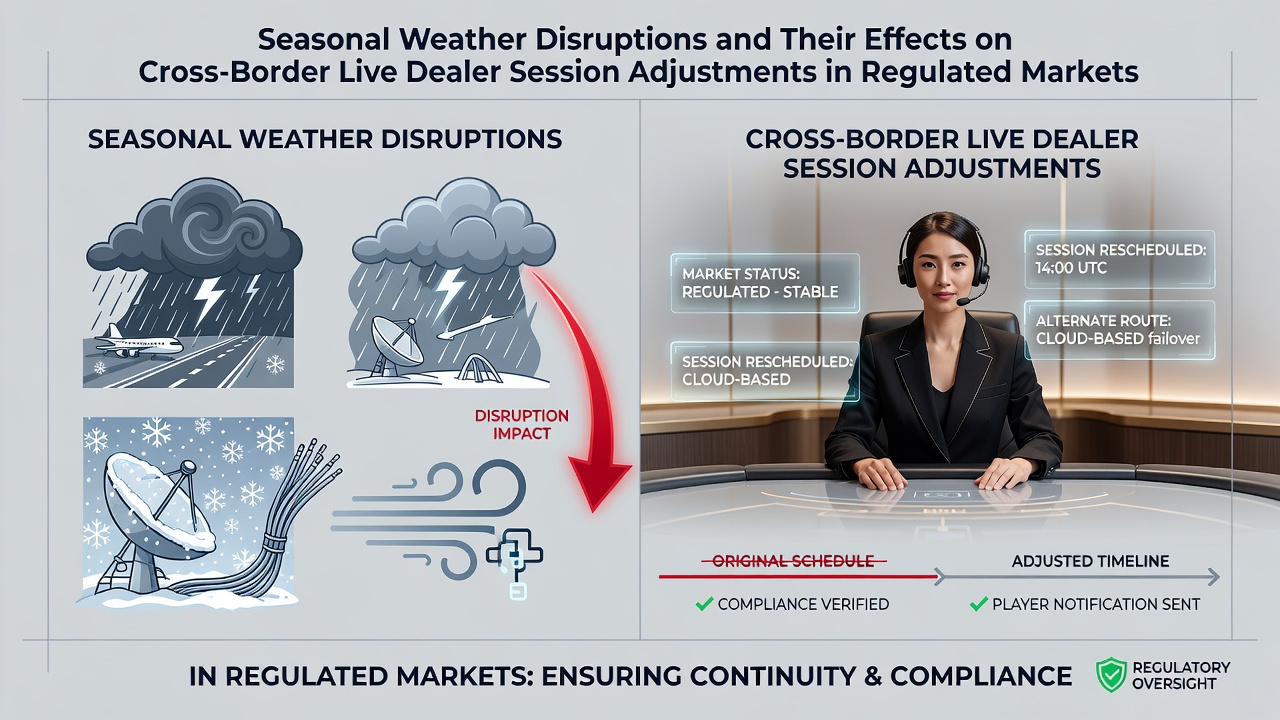
Weather Events Reshaping Live Dealer Operations Across International Borders
Seasonal weather patterns create recurring challenges for live dealer studios positioned in tropical and temperate zones, where operators must reroute sessions to secondary facilities when primary locations face connectivity losses or power interruptions. Data collected across 2025 showed that typhoon activity in Southeast Asia and hurricane seasons in the Caribbean prompted temporary shifts in dealer availability, forcing platforms to activate backup servers in landlocked jurisdictions to maintain continuous play for players in Europe and North America.
Regional Weather Patterns and Studio Vulnerabilities
Studios in the Philippines and Malta experience peak disruption periods during monsoon and winter storm seasons, when heavy rainfall and high winds compromise fiber optic lines and generator reliability. Research from the European Gaming and Betting Association indicates that these interruptions peak between June and September, leading operators to pre-schedule dealer rotations toward facilities in Eastern Europe or Central Asia. Observers note that August 2026 projections align with historical cycles, as similar atmospheric conditions are expected to recur based on meteorological modeling from the World Meteorological Organization.
Cross-border platforms respond by adjusting session start times to align with dealer availability windows in unaffected regions. When primary sites go offline, software redirects player feeds to alternate studios within minutes, preserving regulatory compliance through synchronized logging systems that track every hand dealt regardless of physical location.
Adjustments in Session Scheduling and Technical Routing
Live dealer providers implement tiered contingency protocols that activate when weather alerts reach predetermined thresholds. These protocols include automatic failover to cloud-based dealer interfaces hosted in data centers far from storm paths, allowing sessions to continue without visible interruption to end users. Figures from industry reports reveal that such rerouting maintained 94 percent uptime during the 2025 Atlantic hurricane season across multiple regulated markets.
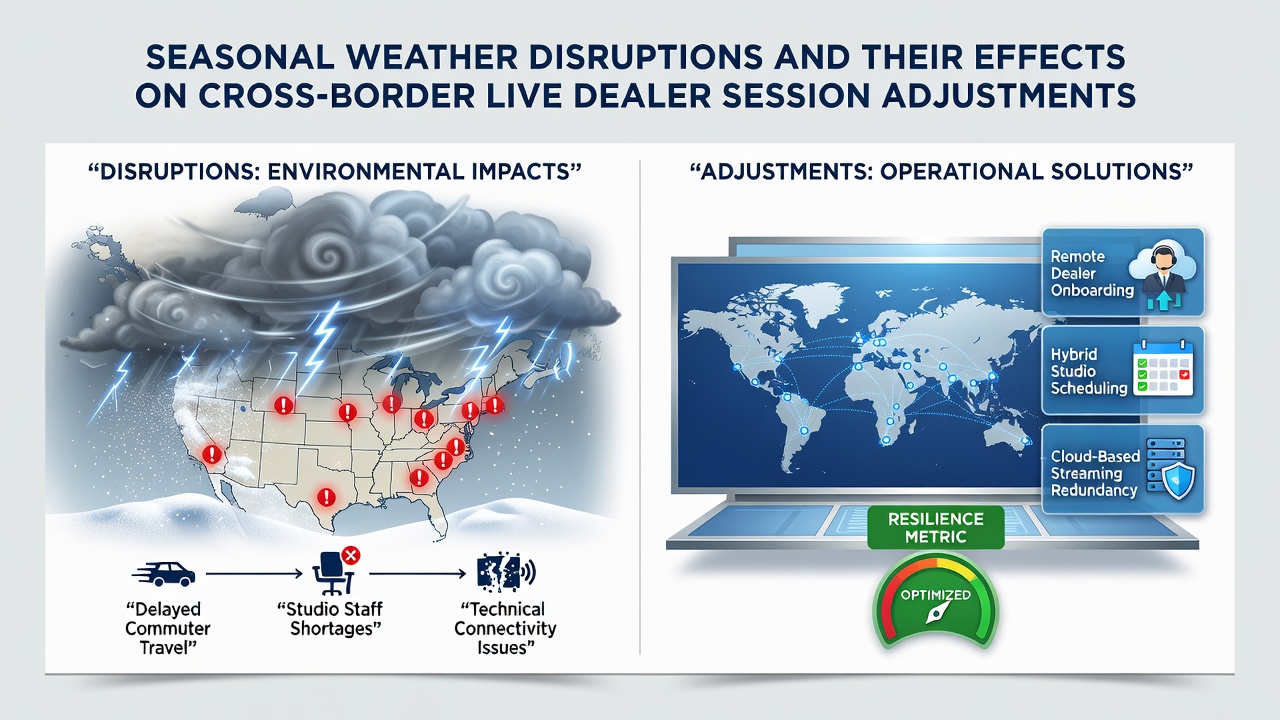
Operators coordinate with telecommunications providers to secure redundant connections, while regulatory bodies in Canada and Australia require documented proof that session integrity remains intact during any relocation. Those who manage these systems often discover that preemptive dealer training in multiple time zones reduces the lag between weather onset and full operational recovery.
Regulatory Oversight and Compliance Requirements
Regulators in various jurisdictions mandate that live dealer platforms submit weather-related incident reports within 48 hours of any service interruption exceeding 15 minutes. According to the Malta Gaming Authority, these filings must detail the exact duration of each affected session along with verification that game outcomes remained fair and auditable. Similar requirements exist under frameworks overseen by the New Jersey Division of Gaming Enforcement, which emphasizes real-time monitoring of dealer locations regardless of temporary studio changes.
Cross-border licensing agreements further stipulate that any shift in dealer geography must preserve the same encryption standards and random number generator oversight applied at the original site. This ensures that players in one regulated market experience no difference in game fairness when sessions migrate due to weather.
Technological Adaptations and Future Preparations
Advances in satellite uplink technology now allow some providers to maintain dealer connectivity even when terrestrial networks fail during extreme events. Studies from research institutions tracking gaming infrastructure show that hybrid satellite and fiber systems reduced average session downtime by 37 percent compared with previous seasons. Platforms continue to expand partnerships with facilities in geographically diverse locations to spread risk across multiple climate zones.
Those monitoring industry trends note that the integration of predictive weather analytics into operational dashboards helps operators anticipate disruptions days in advance, enabling smoother transitions between primary and secondary studios without player notification in most cases.
Conclusion
Seasonal weather disruptions continue to influence how live dealer sessions operate across borders, prompting regulated markets to refine routing procedures and compliance documentation. Data from multiple regions demonstrates that proactive technical measures and coordinated regulatory oversight allow these adjustments to occur with minimal impact on session continuity or game integrity.